How Casino History Panels Can Mislead Without Predicting Anything
Casino history panels record prior outcomes, but their layout can imply more than the data supports. Learn how to read each cue and decide what it means.
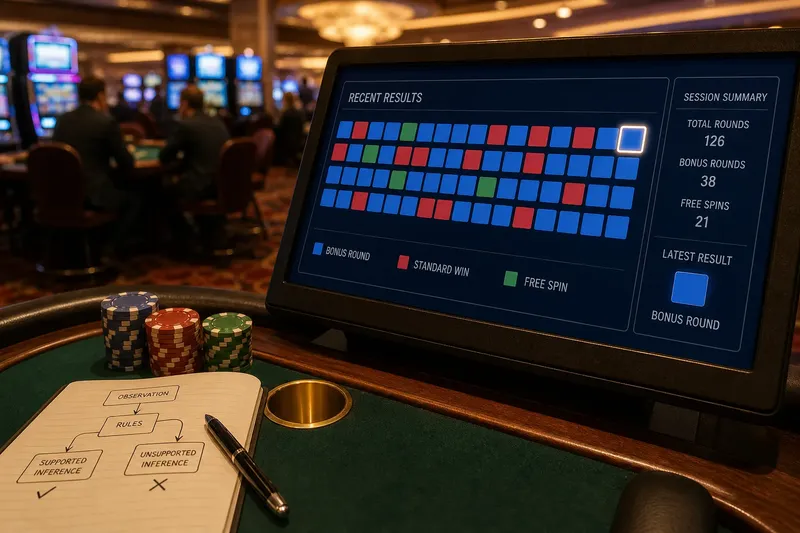
A casino history panel marks a run of red results with a neat column of colored squares. The layout looks organized, almost like a forecast. But a casino history panel records what the interface says happened; its shape alone does not explain how the next result is chosen.
What does a casino history panel actually record?
Start with the panel’s stated purpose. It may list previous outcomes, summarize a game session, or track a feature such as bonus rounds. Those are different records, and none should be treated as a prediction unless the rules explicitly connect the displayed information to future outcomes.
At USTH, students encounter the same basic distinction in scientific measurement: a reading is useful only in relation to what an instrument is designed to measure. A casino display might accurately show an earlier result while offering no information about what comes next. Accuracy about the past is not a forecast.
Why can a history panel look more meaningful than it is?
Panels compress events into shapes. A grid makes repeats easy to spot; a chart gives them a direction; colors separate categories at a glance. These choices help with reading, but can also make a sequence look like a signal even when the game rules assign it no predictive role.
Think of a row of marked squares like a calendar: it makes past days visible, but it does not tell you what tomorrow’s weather will be. A history panel can be informative about recorded events and silent about the process that generates new ones.
That is a different problem from whether a streak makes an outcome “due.” The more specific question here is what the interface has actually recorded, and whether its labels, grouping, or visual emphasis invite a conclusion the rules do not support.
Which parts of the panel deserve a closer read?
- Labels: Check whether a color or symbol is defined in the game rules; if it is, interpret it only as defined, and if it is not, treat it as a visual convention rather than a game signal.
- Time order: Check whether entries are arranged by time; if they are, read them as a sequence of past events, and if the order is unclear, do not infer a trend from their placement.
- Category grouping: Check whether the panel separates distinct game features; if it does, keep those records separate, and if the categories are ambiguous, consult the rules before combining them.
- Missing entries: Check whether the interface explains gaps or filters; if it does, account for that scope, and if it does not, avoid treating the visible sequence as a complete record.
- Highlighted results: Check what the highlight denotes; if the rules tie it to a feature, use that narrow meaning, and if not, regard the emphasis as presentation.
- Explanatory text: Check whether the game states a connection between recorded outcomes and future ones; if it does, read the exact condition, and if it does not, treat the panel as history rather than a forecast.
How should you read a casino history panel?
Separate observation from interpretation. Write down what the panel visibly shows, what the game’s rules say the entries represent, and what you are tempted to infer. If those last two do not connect, the inference is unsupported by the panel.
Say you see a panel with blue squares, a highlighted final square, and a legend that calls blue “bonus round.” You check the rules and see that the panel records completed bonus rounds, but says nothing about the chance of another one. The resulting answer is narrow: a bonus round occurred at each marked point; the highlight identifies the latest entry, not an upcoming event. You gain a clearer reading, not a prediction.
If the game’s description is vague, use the operator’s published rules or help text to clarify what is recorded. If the meaning remains unclear, do not treat the display as advice.
What do readers ask about casino history panels?
Does a highlighted result mean it will happen again?
Not by itself. A highlight may identify the newest entry or draw attention to a feature, so check the legend and rules before assigning it a predictive meaning.
Can the colors reveal a hidden pattern?
Colors can make categories easier to distinguish, but their significance depends on the game’s definitions. Without a stated connection to future outcomes, color arrangement is a way to display history, not a forecast.
What should I do if the panel’s labels are unclear?
Check the game’s published rules or help text for the labels’ meanings. If those sources do not explain them, treat the panel cautiously and avoid basing a decision on an assumed interpretation.
Is a panel useful if it cannot predict the next result?
It can still help identify what the interface claims happened or which feature was recorded. Its usefulness ends where the rules and displayed information stop supporting an inference.
When is the panel making a claim worth checking?
A specific label or rule can be checked against the game’s published explanation. Keep the claim narrow: a marker may identify a completed feature, for example, without saying anything about how often it will recur or what comes next.
The useful search phrase, casino history panel, describes a record on a screen, not a separate source of odds. Read its labels, scope, and rules together. When the display leaves a gap, leave it as a gap rather than filling it with a pattern that merely looks persuasive.